Best Things to do in London United Kingdom, Stuff todo + to see near London for visitors

As the leader in group travel online, our FREE event planning service will find a group hotel discount for your business meeting, conference, convention, family reunion, wedding, work crew, bus tour, military reunion, church event or any group travel. Also try our group cruise, group air, group car and free event websites.

Best Things to do in London United Kingdom

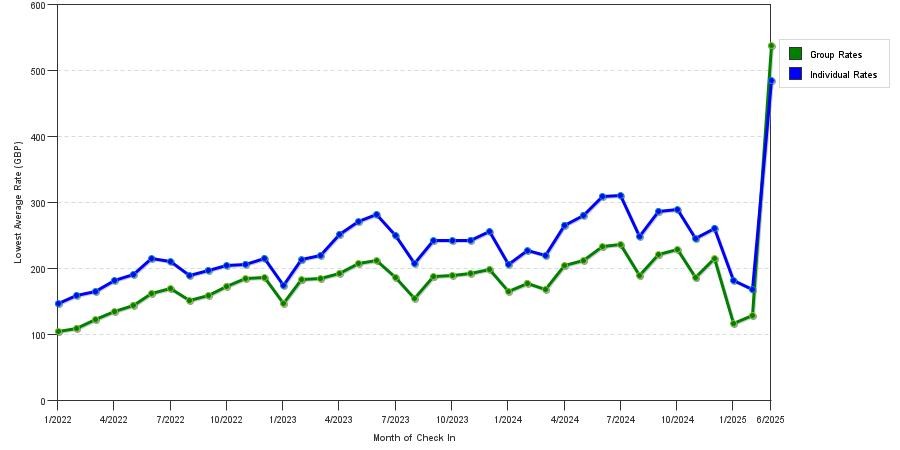
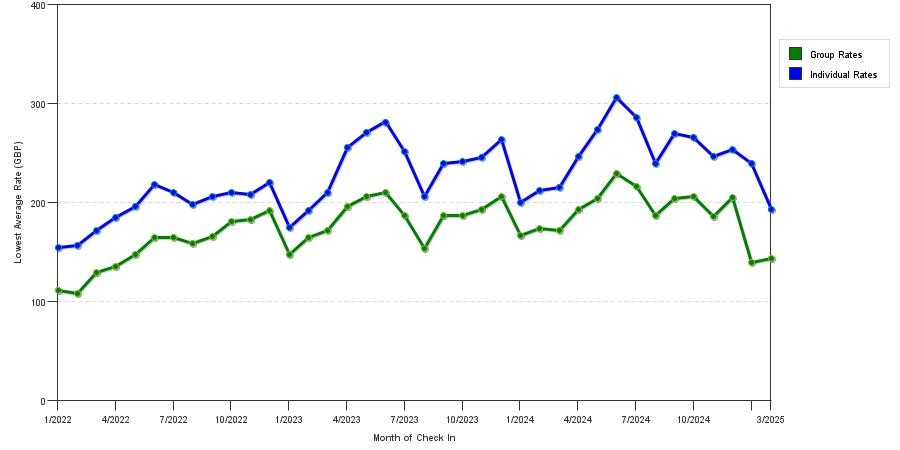
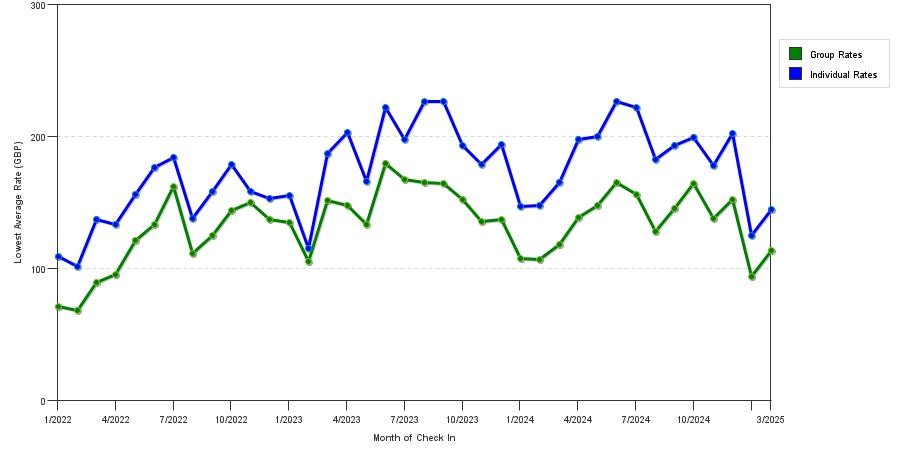
London attractions are listed below. Find things to do in or near London, United Kingdom for your upcoming individual or group travel for London visitors. We also offer the great discounts on London hotel and motel rooms. Group travel? London United Kingdom Group Travel Hotel Rates or London Meeting

Find Hotels   Rooms   Check-In   Check-Out  
   
Click to see Calendar
 
Click to see Calendar

Attractions + Things To Do in London
Things To Do in London: Palace of Westminster (Houses of Parliament) #1 of 30 Things To Do in London
Palace of Westminster (Houses of Parliament)
City of Westminster
~0.03 miles from London city center
Hotels Close to Palace of Westminster (Houses of Parliament)
The Palace of Westminster, also known as the Houses of Parliament or Westminster Palace, is the seat of the two houses of the Parliament of the United Kingdom—the House of Lords and the House of Commons. It lies on the north bank of the River Thames[note 1] in the heart of the London borough of the City of Westminster, close to the historic Westminster Abbey and the government buildings of Whitehall and Downing Street. The name may refer to either of two structures: the Old Palace, a medieval building complex most of which was destroyed in 1834, and its replacement New Palace that stands today; it has retained the style and status of a royal residence, despite its actual use. The first royal palace was built on the site in the eleventh century, and Westminster was the primary London residence of the Kings of England until a fire destroyed much of the complex in 1512. After that, it served as the home of Parliament, which had been meeting there since the thirteenth century, and the seat of the Royal Courts of Justice, based in and around Westminster Hall. In 1834, an even greater fire ravaged the heavily rebuilt Houses of Parliament, and the only structures of significance to survive were Westminster Hall, the Cloisters and Chapter House of St Stephen's, the Chapel of St Mary Undercroft and the Jewel Tower. The subsequent competition for the reconstruction of the Palace was won by architect Charles Barry and his design for a building in the Perpendicular Gothic style. The remains of the Old Palace (with the exception of the detached Jewel Tower) were incorporated in its much larger replacement, which contains over 1,100 rooms organised symmetrically around two series of courtyards. Part of the New Palace's area of 3.24 hectares (8 acres) was reclaimed from the Thames, which is the setting of its principal façade, the 265.8-metre (872 ft) river front. Barry was assisted by Augustus W. N. Pugin, a leading authority on Gothic architecture and style, who provided designs for the decoration and furnishings of the Palace. Construction started in 1840 and lasted for thirty years, suffering great delays and cost overruns, as well as the death of both leading architects; works for the interior decoration continued intermittently well into the twentieth century. Major conservation work has been carried out since, due to the effects of London's pollution, and extensive repairs took place after the Second World War, including the reconstruction of the Commons Chamber following its bombing in 1941. The Palace is one of the centres of political life in the United Kingdom; "Westminster" has become a metonym for the UK Parliament, and the Westminster system of government has taken its name after it. Its Clock Tower, in particular, which has become known as "Big Ben" after its main bell, is an iconic landmark of London and the United Kingdom in general, one of the most popular tourist attractions in the city and an emblem of parliamentary democracy. The Palace of Westminster has been a Grade I listed building since 1970 and part of a UNESCO World Heritage Site since 1987.
http://www.parliament.uk/about/history/building.cfm
Things To Do in London: Big Ben (Clock Tower) #2 of 30 Things To Do in London
Big Ben (Clock Tower)
London
~0.04 miles from London city center
Hotels Close to Big Ben (Clock Tower)
Big Ben is the nickname for the great bell of the clock at the north-eastern end of the Palace of Westminster in London, and is often extended to refer to the clock or the clock tower as well. Big Ben is the largest four-faced chiming clock and the third-tallest free-standing clock tower in the world. It celebrated its 150th anniversary in May 2009 (the clock itself first ticking on 31 May),during which celebratory events took place. The nearest London Underground station is Westminster on the Circle, District and Jubilee lines.
Things To Do in London: Westminster Abbey #3 of 30 Things To Do in London
Westminster Abbey
City of Westminster
~0.11 miles from London city center
Hotels Close to Westminster Abbey
Westminster Abbey, whose formal name is the Collegiate Church of St Peter, is a Gothic monastery church that is the traditional place of coronation and burial site for English monarchs. God is worshipped daily at Westminster Abbey, continuing a 1400 year tradition at this church. The Collegiate Church of St Peter at Westminster, which is almost always referred to popularly and informally as Westminster Abbey, is a large, mainly Gothic church, in Westminster, London, England, located just to the west of the Palace of Westminster. It is the traditional place of coronation and burial site for English, later British and later still (and currently) monarchs of the Commonwealth Realms. It briefly held the status of a cathedral from 1546–1556, and is a Royal Peculiar. Westminster Abbey is governed by the Dean and Chapter of Westminster, as established by Royal Charter of Queen Elizabeth I in 1560, which created it as the Collegiate Church of St Peter Westminster and a Royal Peculiar under the personal jurisdiction of the Sovereign. The members of the Chapter are the Dean and four residentiary Canons, assisted by the Receiver General and Chapter Clerk. One of the Canons is also Rector of St Margaret’s Church Westminster Abbey (who also holds the post of Chaplain to the Speaker of the House of Commons). In addition to the Dean and Canons there are at present two full time minor canons, one precentor, the other succentor. The office of Priest Vicar was created in the 1970s for those who assist the minor canons. Together with the Clergy and Receiver General and Chapter Clerk, various Lay Officers constitute the College, including the Organist and Master of the Choristers, the Registrar, the Auditor, the Legal Secretary, the Surveyor of the Fabric, the Head Master of the Choir School, the Keeper of the Muniments and the Clerk of the Works, as well as twelve Lay Vicars and ten of the choristers and the High Steward and High Bailiff. There are also forty Queen’s Scholars who are pupils at Westminster School (the School has its own Governing Body). Those who are most directly concerned with liturgical and ceremonial matters are the two Minor Canons and the Organist and Master of the Choristers.
http://www.westminster-abbey.org/
Things To Do in London: The Queen Elizabeth II Conference Centre #4 of 30 Things To Do in London
The Queen Elizabeth II Conference Centre
City of Westminster
~0.13 miles from London city center
Hotels Close to The Queen Elizabeth II Conference Centre
Things To Do in London: Cabinet War Rooms #5 of 30 Things To Do in London
Cabinet War Rooms
London
~0.15 miles from London city center
Hotels Close to Cabinet War Rooms
The Churchill Museum and Cabinet War Rooms is a museum in London and one of the five branches of the Imperial War Museum. The Cabinet War Rooms are an underground complex that had been used as an operational command and control centre by the British government throughout the Second World War. Located beneath the Treasury building in the Whitehall area of Westminster, the facilities were abandoned in August 1945 after the surrender of Japan. The Rooms were opened to the general public in 1984, having previously been managed by the Department for the Environment. Following a major expansion in 2003, the Rooms were reopened in 2005 as the rebranded Churchill Museum and Cabinet War Rooms, with the additional space developed as a biographical museum exploring the life of British statesman Winston Churchill.
Things To Do in London: Victoria Tower #6 of 30 Things To Do in London
Victoria Tower
London
~0.15 miles from London city center
Hotels Close to Victoria Tower
The Victoria Tower is the square tower at the southern end of the Palace of Westminster in London, facing south and west onto Black Rod's Garden and Old Palace Yard. At 98.5 metres (323 ft), it is slightly taller than the more famous Clock Tower at the north end of the Palace (96.3 metres (316 ft)). It houses the Parliamentary Archives in archive conditions meeting the BS 5454 standard, on 12 floors. All 14 floors of the building were originally linked via a single wrought-iron Victorian staircase of 553 steps, of which five floors survive. The main entrance at the base of the tower is the Sovereign's Entrance, through which the Monarch passes at the State Opening of Parliament. On top of the Victoria Tower is an iron flagstaff, from which the Union Flag is flown when Parliament is in session (unless the Sovereign is present in the Palace, when it is replaced by the Royal Standard).
Things To Do in London: Westminster Bridge #7 of 30 Things To Do in London
Westminster Bridge
London
~0.20 miles from London city center
Hotels Close to Westminster Bridge
Westminster Bridge is a road and foot traffic bridge over the River Thames between Westminster, Middlesex bank, and Lambeth, Surrey bank in what is now Greater London, England. For over 600 years, the nearest bridge to London Bridge was at Kingston. Proposals for a bridge at Westminster had been made as early as 1664. These were opposed by the Corporation of London and the watermen. Despite further opposition in 1722 and after a new timber bridge was built at Putney in 1729, the scheme received parliamentary approval in 1736. Financed by private capital, lotteries and grants, Westminster Bridge, designed by the Swiss architect Charles Labelye, was built between 1739-1750. The City of London responded to Westminster Bridge by removing the buildings on London Bridge and widening it in 1760-63. The City also commenced work on the Blackfriars Bridge, which opened in 1769. Other bridges from that time include Kew Bridge (1759), Battersea Bridge (1773), and Richmond Bridge (1777). The bridge was required to assist in the development of both South London and to give access directly to the south-coast ports for the north-bank expansion of the 'West End', without traffic having to make its way through the already over-congested routes, of the Strand and New Oxford Street, into the City and across London Bridge. A group of by-pass roads were also developed to facilitate this, resulting in the complex junction at Elephant & Castle in Southwark, then part of Surrey. By the mid 19th century it was subsiding badly and expensive to maintain. The current bridge was designed by Thomas Page and opened in 1862. With an overall length of 252 metres (826.8 ft) and a 26 metre width, it is a seven-arch wrought iron bridge which has Gothic detailing by Charles Barry (the architect of the Palace of Westminster). It is the oldest bridge in central London. The bridge is painted predominantly green, the same colour as the leather seats in the House of Commons which is on the side of the Palace of Westminster nearest the bridge. This is in contrast to Lambeth Bridge which is red, the same colour as the seats in the House of Lords and is on the opposite side of the Houses of Parliament. In 2005 it underwent a complete refurbishment, which was finished in 2007. This sought to restore it to its former glory by replacing the iron fascias and repainting the whole bridge. The work was completed by contractors Interserve and engineers Tony Gee and Partners. It links the Palace of Westminster on the west side of the river with County Hall and the London Eye on the east and was the finishing point during the early years of the London Marathon. The next bridge downstream is Hungerford footbridge and upstream is Lambeth Bridge. The bridge was given Grade II* listed structure in 1981. In the 2002 science fiction film 28 Days Later, the protagonist awakes from a coma to find London deserted, and walks over the Westminster Bridge whilst looking for people. Westminster Bridge is the start and finish point for the Bridges Handicap Race, a traditional London running race. William Wordsworth wrote the sonnet Composed upon Westminster Bridge, September 3, 1802.
Things To Do in London: London Eye #8 of 30 Things To Do in London
London Eye
City of Westminster
~0.21 miles from London city center
Hotels Close to London Eye
The Merlin Entertainments London Eye (known more simply as The London Eye, and also known as the Millennium Wheel), at a height of 135 metres (443 ft), is the largest Ferris wheel in Europe, and has become the most popular paid tourist attraction in the United Kingdom, visited by over three million people in one year. At the time it was erected, in 1999, it was the tallest Ferris wheel in the world, until it was surpassed by the Star of Nanchang (160 m) in May 2006, and then the Singapore Flyer (165 m) on 11 February 2008. However, it is still described by its operators as "the world's tallest cantilevered observation wheel" (as the entire structure is supported by an A-frame on one side only). The London Eye is located at the western end of Jubilee Gardens, on the South Bank of the River Thames in the London Borough of Lambeth in England, between Westminster Bridge and Hungerford Bridge. The site is adjacent to that of the former Dome of Discovery, which was built for the Festival of Britain in 1951.
Things To Do in London: Banqueting House #9 of 30 Things To Do in London
Banqueting House
London
~0.32 miles from London city center
Hotels Close to Banqueting House
Things To Do in London: The London Aquarium #10 of 30 Things To Do in London
The London Aquarium
City of Westminster
~0.34 miles from London city center
Hotels Close to The London Aquarium
The Sea Life London Aquarium is located on the ground floor of County Hall on the South Bank of the River Thames in central London, near the Merlin Entertainments London Eye. It first opened in March 1997 and remains the capital's largest collection of aquatic species. The attraction claims that a million visitors a year view its displays. In 2008, the site was closed for major refurbishments at a cost of £5 million, which were completed in April 2009. Among the additions included a new underwater tunnel, Shark Walk, revamped Pacific Ocean tank and a complete rerouting of the exhibit, all of which were carried out under the supervision of architects Kay Elliott. The London Aquarium is involved in breeding and conservation projects. In April 2008, the aquarium was purchased by the world's second-largest attractions operator, Merlin Entertainments for an undisclosed sum. The attraction officially became a Sea Life Centre in April 2009
Things To Do in London: London Aquarium #11 of 30 Things To Do in London
London Aquarium
London
~0.37 miles from London city center
Hotels Close to London Aquarium
The Sea Life London Aquarium is located on the ground floor of County Hall on the South Bank of the River Thames in central London, near the Merlin Entertainments London Eye. It first opened in March 1997 and remains the capital's largest collection of aquatic species. The attraction claims that a million visitors a year view its displays. In 2008, the site was closed for major refurbishments at a cost of £5 million, which were completed in January 2009. Among the additions included a new glass tunnel, Shark Walk, revamped Pacific Ocean tank and a complete rerouting of the exhibit. It has a collection of water tanks showing around 400 species of fish. The aquarium includes three floors and 14 different zones beginning in the upper Atlantic, British harbour, Ray pool, Indian Ocean, mid-Pacific, Atlantic lower, temperate waters, Pacific, coral reef, invertebrates, tropical freshwater, Thames freshwater stream, rivers and ponds, upper, mangrove and rainforest). The Pacific and Atlantic zones both contain large tanks with numerous species; the Pacific tank contains Green sea turtles and the Atlantic various species of sharks such as Sand Tigers, Brown Sharks and Nurse Sharks. The London Aquarium is involved in breeding and conservation projects. In April 2008, the aquarium was purchased by the world's second-largest attractions operator, Merlin Entertainments for an undisclosed sum. The attraction officially became a Sea Life Centre in April 2009.
Things To Do in London: Lambeth Bridge #12 of 30 Things To Do in London
Lambeth Bridge
London
~0.40 miles from London city center
Hotels Close to Lambeth Bridge
Lambeth Bridge is a road traffic and footbridge crossing the River Thames in an east-west direction in central London, England; the river flows north at the crossing point. Downstream, the next bridge is Westminster Bridge; upstream the next is Vauxhall Bridge. The most conspicuous colour in the bridge's paint scheme is red, the same colour as the leather benches in the House of Lords which is at the southern end of the Palace of Westminster nearest the bridge. This is in contrast to Westminster Bridge which is predominantly green, the same colour as the benches in the House of Commons at the northern end of the Houses of Parliament. On the east side, in Lambeth are Lambeth Palace, the Albert Embankment, St. Thomas' Hospital, and the International Maritime Organization. On the west side, in Westminster, are Thames House (the headquarters of MI5), behind which is Horseferry House (the National Probation Service headquarters), and Clelland House and Abel House (the headquarters of HM Prison Service), and the Millbank Tower and Tate Britain. The Palace of Westminster is a short walk downstream to the north through the Victoria Tower Garden.
Things To Do in London: Florence Nightingale Museum #13 of 30 Things To Do in London
Florence Nightingale Museum
London
~0.40 miles from London city center
Hotels Close to Florence Nightingale Museum
The Florence Nightingale Museum is located at St Thomas' Hospital, which faces the Palace of Westminster across the River Thames in central London, England. It is open to the public seven days a week. The museum tells the story of the life and work of Florence Nightingale, the founder of modern nursing in the United Kingdom. In 1860, four years after her famous involvement in the Crimean War, Nightingale founded the Nightingale Training School for nurses at St. Thomas' Hospital.
Things To Do in London: Admiralty Arch #14 of 30 Things To Do in London
Admiralty Arch
The Mall Cockspur Street, Trafalgar Square London SW1A 2WH London - +44 (0)20 7276 1800
~0.47 miles from London city center
Hotels Close to Admiralty Arch
Admiralty Arch was designed in 1910 by Sir Aston Webb (who also worked on Buckingham Palace and the Victoria and Albert Museum) to provide an elegant ceremonial passage from the hectic Trafalgar Square towards Buckingham Palace.
Things To Do in London: Lambeth Palace #15 of 30 Things To Do in London
Lambeth Palace
London
~0.47 miles from London city center
Hotels Close to Lambeth Palace
Lambeth Palace is the official London residence of the Archbishop of Canterbury. It is located in Lambeth, on the south bank of the River Thames a short distance upstream of the Palace of Westminster on the opposite shore. It was acquired by the archbishopric around 1200. Lambeth Palace Road is to the west, Lambeth Road is to the south and Lambeth Bridge is to the south-west.
Things To Do in London: Trafalgar Square #16 of 30 Things To Do in London
Trafalgar Square
City of Westminster
~0.50 miles from London city center
Hotels Close to Trafalgar Square
Trafalgar Square is a square in central London, England. With its position in the heart of London, it is a tourist attraction, and one of the most famous squares in the United Kingdom and the world. At its centre is Nelson's Column, which is guarded by four lion statues at its base. Statues and sculptures are on display in the square, including a fourth plinth displaying changing pieces of contemporary art. The square is also used as a location for political demonstrations and community gatherings, such as the celebration of New Year's Eve in London. The name commemorates the Battle of Trafalgar (1805), a British naval victory of the Napoleonic Wars. The original name was to have been "King William the Fourth's Square", but George Ledwell Taylor suggested the name "Trafalgar Square". The northern area of the square had been the site of the King's Mews since the time of Edward I, while the southern end was the original Charing Cross, where the Strand from the City met Whitehall, coming north from Westminster. As the midpoint between these twin cities, Charing Cross is to this day considered the heart of London, from which all distances are measured. In the 1820s the Prince Regent engaged the landscape architect John Nash to redevelop the area. Nash cleared the square as part of his Charing Cross Improvement Scheme. The present architecture of the square is due to Sir Charles Barry and was completed in 1845. Trafalgar Square is owned by the Queen in Right of the Crown, and managed by the Greater London Authority. Trafalgar Square ranks as the fourth most popular tourist attraction on Earth with more than fifteen million visitors a year.
Things To Do in London: Benjamin Franklin House #17 of 30 Things To Do in London
Benjamin Franklin House
London
~0.51 miles from London city center
Hotels Close to Benjamin Franklin House
In the heart of London, just steps from famed Trafalgar Square, is Benjamin Franklin House, the world's only remaining Franklin home. For nearly sixteen years between 1757 and 1775, Dr Benjamin Franklin - scientist, diplomat, philosopher, inventor, Founding Father of the United States and more - lived behind its doors. Benjamin Franklin House, built circa 1730, is now open to the public as a dynamic museum and educational facility. The Historical Experience presents the excitement and uncertainty of Franklin's London years using rooms where so much took place as staging for a drama which seamlessly integrates live performance, cutting edge lighting, sound and projection technology. School visitors explore the Student Science Centre featuring hands-on experimentation with Franklin's London scientific discoveries, juxtaposing past and present knowledge. The top floor Robert H. Smith Scholarship Centre is a focal point in Europe for Franklin and Franklin-related study, featuring a full set of the Papers of Benjamin Franklin, as catalogued by Yale University, and an active symposia programme. While lodging at 36 Craven Street, Franklin's main occupation was mediating unrest between Britain and America, but he also served as Deputy Postmaster for the Colonies; pursued his love of science (exploring bifocal spectacles, the energy-saving Franklin stove); explored health (innoculation, air baths, cures for the common cold); music (inventing the delightful glass armonica for which Mozart, Bach and Beethoven composed) and letters (articles, epitaphs, and his witty Craven Street Gazette), all while forging a hearty social life and close friendships with leading figures of the day.
Things To Do in London: Nelson's Column #18 of 30 Things To Do in London
Nelson's Column
London
~0.51 miles from London city center
Hotels Close to Nelson's Column
Nelson's Column is a monument in Trafalgar Square, London, England, United Kingdom. The column was built between 1840 and 1843 to commemorate Admiral Horatio Nelson's death at the Battle of Trafalgar in 1805. The 5.5 m (18 ft) statue of Nelson stands on top of a 46 m (151 ft) Foggintor granite column. The statue faces south looking towards the Admiralty and Portsmouth where Nelson's & the Royal Navy Flagship HMS Victory is docked, with the Mall on his right flank, where Nelson's ships are represented on the top of each flagpole[citation needed]. The top of the Corinthian column (based on one from the Temple of Mars Ultor in Rome) is decorated with bronze acanthus leaves cast from British cannon. The square pedestal is decorated with four bronze panels, cast from captured French guns, depicting Nelson's four great victories. Part of the interior base was made from the 29 cannon recovered from HMS Royal George, HMS Victory's sister ship. The monument was designed by architect William Railton in 1838, and built by the firm Peto & Grissell. Railton's original 1:22-scale stone model is exhibited at the National Maritime Museum in Greenwich, London. The sandstone statue at the top was sculpted by E.H. Baily, a member of the Royal Academy;[3] a small bronze plaque crediting him is at the base of the statue. The four bronze panels around the pedestal were undertaken by the sculptors Musgrave Watson, John Ternouth, William F Woodington, and John Edward Carew. The entire monument was built at a cost of £47,500, or £3.5 million in 2004 terms (roughly $6.1 million US). The four lions, by Sir Edwin Landseer, at the column's base were added after much delay in 1867.
Things To Do in London: Royal Opera House #19 of 30 Things To Do in London
Royal Opera House
City of Westminster
~0.58 miles from London city center
Hotels Close to Royal Opera House
The Royal Opera House is an opera house and major performing arts venue in the London district of Covent Garden. The large building is often referred to as simply "Covent Garden", after a previous use of the site of the opera house's original construction in 1732. It is the home of The Royal Opera, The Royal Ballet and the Orchestra of the Royal Opera House. Originally called the Theatre Royal, it served primarily a playhouse for the first hundred years of its history. In 1734, the first ballet was presented. A year later Handel's first season of operas began. Many of his operas and oratorios were specifically written for Covent Garden and had their premieres there. The current building is the third theatre on the site following disastrous fires in 1808 and 1857. The façade, foyer and auditorium date from 1858, but almost every other element of the present complex dates from an extensive reconstruction in the 1990s. The Royal Opera House seats 2,268 people and consists of four tiers of boxes and balconies and the amphitheatre gallery. The proscenium is 12.20 m wide and 14.80 m high. The main auditorium is a Grade 1 listed building.
Things To Do in London: St. James Park #20 of 30 Things To Do in London
St. James Park
London
~0.59 miles from London city center
Hotels Close to St. James Park
St. James's Park is a 23 hectare (58 acre) park in Westminster, central London, the oldest of the Royal Parks of London. The park lies at the southernmost tip of the St. James's area, which was named after a leper hospital dedicated to St. James the Less. St. James's Park is bounded by Buckingham Palace to the west, The Mall and St. James's Palace to the North, Horse Guards to the east, and Birdcage Walk to the south. The park has a small lake, St. James's Park Lake, with two islands, Duck Island (named for the lake's collection of waterfowl), and West Island. A bridge across the lake affords a view of Buckingham Palace framed by trees and fountains, and a view of the main building of the Foreign and Commonwealth Office, similarly framed, to the east. The park is the most easterly of a near-continuous chain of parks that also comprise (moving westward) Green Park, Hyde Park and Kensington Gardens. The closest London Underground stations are St. James's Park, Victoria, and Westminster.
Things To Do in London: Cleopatra's Needle #21 of 30 Things To Do in London
Cleopatra's Needle
London
~0.60 miles from London city center
Hotels Close to Cleopatra's Needle
Cleopatra's Needle is the popular name for each of three Ancient Egyptian obelisks re-erected in London, Paris, and New York City during the nineteenth century. The London and New York ones are a pair, while the Paris one comes from a different original site where its twin remains. Although the needles are genuine Ancient Egyptian obelisks, they are somewhat misnamed as they have no particular connection with Queen Cleopatra VII of Egypt, and were already over a thousand years old in her lifetime. The Paris "needle" was the first to be moved and re-erected, and the first to acquire the nickname.
Things To Do in London: St. James Palace #22 of 30 Things To Do in London
St. James Palace
London
~0.60 miles from London city center
Hotels Close to St. James Palace
St. James's Palace is one of London's oldest palaces. It is situated in Pall Mall, just north of St. James's Park. Although no sovereign has resided there for almost two centuries, it has remained the official residence of the Sovereign and the most senior royal palace in the UK. For this reason it gives its name to the Royal Court (the "Court of St. James's"). The palace was commissioned by Henry VIII, on the site of a former leper hospital dedicated to Saint James the Less (from whom the Palace and its nearby Park take their names); the hospital was disbanded in 1532. The new palace, secondary in interest to Henry's Whitehall Palace, was constructed in the red-brick Tudor style around four courtyards: its gatehouse (illustration) survives on the north side, flanked by polygonal turrets with mock battlements, fitted with Georgian sash windows. It became the principal residence of the monarch in London in 1698, during the reign of William III and Mary II when Whitehall Palace was destroyed by fire, and became the administrative centre of the monarchy (a role it still retains). Two of Henry VIII's children died there: Henry Fitzroy and Mary I (Mary's heart and bowels were buried in the palace's Chapel Royal). Elizabeth I was said to have spent the night there while waiting for the Spanish Armada to sail up the channel. Charles I slept rather less soundly -- as it was his final bed before his execution. Oliver Cromwell then took it over, and turned it into a barracks during the English Commonwealth period. It was then restored by Charles II (Charles I's son), who also laid out St. James's Park. The first three Georges used St. James's Palace as their principal London residence even though it was far from grand for the city palace of a major European monarchy; Daniel Defoe called it "low and mean" in 1725. In 1809 a fire destroyed part of the palace, including the monarch's private apartments at the south east corner. These apartments were not replaced, leaving the Queen's Chapel in isolation, and Marlborough Road now runs between the two buildings. George III had purchased Buckingham House – the predecessor to Buckingham Palace – for his queen back in 1762, and St. James's continued to decline in importance in the first half of the 19th century. It increasingly came to be used only for formal occasions such as official receptions, royal marriages, and christenings. Queen Victoria formalised the move in 1837, ending St. James's status as the official residence of the monarch. Some structures and interiors survive by Sir Christopher Wren and William Kent, but most was remodelled in the nineteenth century. William Morris and his firm were commissioned to redecorate the Armoury and the Tapestry Room, 1866-67.
Things To Do in London: Waterloo Station #23 of 30 Things To Do in London
Waterloo Station
City of Westminster
~0.60 miles from London city center
Hotels Close to Waterloo Station
Waterloo Station is a major railway terminus in London, England. It is the UK's largest station, covering an area of 24.5 acres. Waterloo station, also known as London Waterloo, is a major railway terminus in central London, owned and operated by Network Rail. It is near the South Bank in the London Borough of Lambeth, and in Travelcard Zone 1. With some 88 million passengers in financial year 2008-09, Waterloo is easily Britain's busiest railway station in terms of passenger throughput. The total number of people passing through the station is considerably greater, as this figure is based on ticket sales for London Waterloo alone and does not include usage data for the Underground and Waterloo East. The Waterloo complex ranks as one of the busiest passenger terminals in Europe, comparable to the Gare Saint-Lazare and second only to the Gare du Nord in Paris. It has more platforms and a greater floor area than any other railway station in the UK. (Clapham Junction, just under four miles down the line, has the largest number of trains.) It is the terminus of a network of railway lines in Surrey, Berkshire, Hampshire, South West England, and the south-western suburbs of London. Its most important long-distance destinations are Portsmouth, Southampton and Bournemouth, all on the south coast.
Things To Do in London: St. Martin in the Fields #24 of 30 Things To Do in London
St. Martin in the Fields
London
~0.61 miles from London city center
Hotels Close to St. Martin in the Fields
St. Martin-in-the-Fields is an Anglican church at the northeast corner of Trafalgar Square in the City of Westminster, London. Its patron is Saint Martin of Tours. St Martin-in-the-Fields and Charing Cross, circa 1562 Excavations at the site in 2006 led to the discovery of a grave dated about 410. The site is outside the city limits of Roman London (as was the usual Roman practice for burials), but is particularly interesting for being so far outside, and this is leading to a reappraisal of Westminster's importance at that time. The burial is thought by some to mark a Christian centre of that time (possibly reusing the site or building of a pagan temple).
Things To Do in London: Her Majesty's Theatre #25 of 30 Things To Do in London
Her Majesty's Theatre
London
~0.62 miles from London city center
Hotels Close to Her Majesty's Theatre
Her Majesty's Theatre is a West End theatre, in Haymarket, City of Westminster, London. The present building was designed by Charles J. Phipps and was constructed in 1897 for actor-manager Herbert Beerbohm Tree, who established the Royal Academy of Dramatic Art at the theatre. In the early decades of the 20th century, Tree produced spectacular productions of Shakespeare and other classical works, and the theatre hosted premières by major playwrights such as George Bernard Shaw, J. M. Synge, Noël Coward and J. B. Priestley. Since World War I, the wide flat stage has made the theatre suitable for large-scale musical productions, and the theatre has specialised in hosting musicals. The theatre has been home to record-setting musical theatre runs, notably the World War I sensation Chu Chin Chow and the current production, Andrew Lloyd Webber's The Phantom of the Opera, which has played continuously at Her Majesty's since 1986. The theatre was established by architect and playwright John Vanbrugh, in 1705, as the Queen's Theatre. Legitimate drama unaccompanied by music was prohibited by law in all but the two London patent theatres, and so this theatre quickly became an opera house. Between 1711 and 1739, more than 25 operas by George Frederick Handel premièred here.[3] In the early 19th century, the theatre hosted the opera company that was to move to the Theatre Royal, Covent Garden, in 1847, and presented the first London performances of Mozart's La clemenza di Tito, Così fan tutte and Don Giovanni.[4] It also hosted the Ballet of her Majesty's Theatre in the mid-19th century, before returning to hosting the London premières of such famous operas as Bizet's Carmen and Wagner's Ring Cycle. The name of the theatre changes with the gender of the monarch. It first became the King's Theatre in 1714 on the accession of George I. Most recently, the theatre was known as His Majesty's Theatre from 1901 to 1952, and it became Her Majesty's on the accession of Elizabeth II. The theatre's capacity is 1,216 seats, and the building was Grade II* listed by English Heritage in January 1970. Really Useful Group Theatres has owned the theatre building since 2000; the land beneath it is on a long-term lease from the Crown Estate.
Things To Do in London: Buckingham Palace #26 of 30 Things To Do in London
Buckingham Palace
City of Westminster
~0.62 miles from London city center
Hotels Close to Buckingham Palace
Things To Do in London: Westminster Cathedral #27 of 30 Things To Do in London
Westminster Cathedral
London
~0.63 miles from London city center
Hotels Close to Westminster Cathedral
Westminster Cathedral in London is the mother church of the Roman Catholic community in England and Wales and the Metropolitan Church and Cathedral of the Archbishop of Westminster. It is dedicated to the Most Precious Blood of Jesus Christ. The cathedral is located in Victoria, SW1, in the City of Westminster. It is the largest Roman Catholic church in England and Wales, and should not be confused with Westminster Abbey of the Church of England. Westminster Cathedral is the seat of the Archbishop of Westminster, currently Archbishop Vincent Nichols. As a matter of custom, each newly appointed Archbishop of Westminster has eventually been created a cardinal in consistory.
Things To Do in London: Victoria Embankment Gardens #28 of 30 Things To Do in London
Victoria Embankment Gardens
London
~0.63 miles from London city center
Hotels Close to Victoria Embankment Gardens
The Victoria Embankment Gardens are a series of gardens on the North side of the River Thames between Blackfriars Bridge and Westminster Bridge in London. Between 1865 and 1870 the northern embankment and sewer was built by Sir Joseph Bazelgette. In 1874 gardens were created on the reclaimed land on the inward side of the roadway named Victoria Embankment. There were four sections created, the Temple Garden to the East, the Main Gardens to the West (This was originally known as the Adelphi Gardens), and two other sections to the South following the bend of the Thames. The gardens are now under the control of the City of Westminster. The gardens are fully fenced and have designated times when open. They open at 07:30 throughout the year, but close at varying times 16:30 during the coldest months and 21:30 at the height of summer. All gardens have gravel paths that are well lined with seat mainly given as memorials. The river side of the gardens is lined with mature trees. grass and flower beds are also spead throughout them, and on warm days, workers from near-by establishments can be seen having picnic lunches on both seats and the grass. There are a number of statues.
Things To Do in London: Tate Museum Britain #29 of 30 Things To Do in London
Tate Museum Britain
City of Westminster
~0.64 miles from London city center
Hotels Close to Tate Museum Britain
Tate Britain is an art gallery situated on Millbank in London, and part of the Tate gallery network in Britain, with Tate Modern, Tate Liverpool and Tate St Ives. It is the oldest gallery in the network, opening in 1897. It houses a substantial collection of the works of J.M.W. Turner. It is housed in the Tate's original premises on Millbank on the site of Millbank Prison. The front part of the building was designed by Sidney R. J. Smith with a classical portico and dome behind. Construction, undertaken by Higgs and Hill, commenced in 1893. The gallery opened on 21 July 1897 as the National Gallery of British Art, but became commonly known as the Tate Gallery, after its founder Sir Henry Tate. There have been several extensions over the years. The central sculpture gallery was designed by John Russell Pope. Crises during its existence include flood damage to work from the River Thames and bomb damage during World War II, though most of the collection was in safe storage elsewhere, and a large Stanley Spencer painting, deemed too big to move, had a protective brick wall built in front of it. The gallery housed and displayed both British and Modern collections, but was renamed "Tate Britain" in March 2000, before the launch of Tate Modern, since which time it has been dedicated to the display of historical and contemporary British art only. Tate Britain includes the Clore Gallery of 1987, designed by James Stirling, which houses work by J.M.W. Turner.
Things To Do in London: Edith Cavell Memorial #30 of 30 Things To Do in London
Edith Cavell Memorial
London
~0.65 miles from London city center
Hotels Close to Edith Cavell Memorial
Following her death, many memorials were created around the world to remember Cavell. One of the first was the one unveiled in October 1918 by Queen Alexandra on the grounds of Norwich Cathedral, near a home for nurses which also bore her name. On May 19, 1919, her body was interred near the memorial


Londn ondon lndon lodon lonon londo llondon loondoLondon things stuff cool fun attractions atractions landmarks idea ideas to see visit landmark land mark todo to do nearby near close next by cheap hotel rooms