When to Visit Los Angeles, California
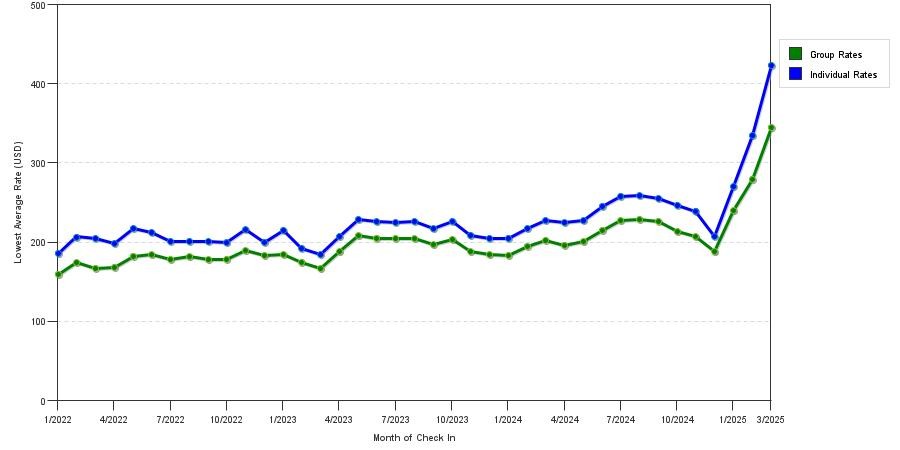
The most popular season for visiting Los Angeles is between June and August. However, this is also the hottest part of the year. If you have a flexible schedule, a better time to visit is between March and May or September and November. The weather cools down during these months, making for a much more comfortable vacation.
There are also several special events you can take advantage of during the spring and fall. The Los Angeles Marathon takes place in March, while the California Poppy Festival takes over in April. The Los Angeles International Tamale Festival is a compelling reason to consider visiting in the cool of November.
Winter is the least popular time for Los Angeles tourism. The weather is rainy, driving many tourists away. However, it's worth considering a visit between December and February for lower hotel rates and emptier attractions. The average highs in the 60s are far warmer than what people face in many other parts of the country. January visitors can catch the Los Angeles Art Show, and those who come in February may see the Chinese New Year celebration and Golden Dragon Parade.
Below is a chart of the current pricing seasonality of hotels and motels in Los Angeles, CA:
Los Angeles by Star Rating
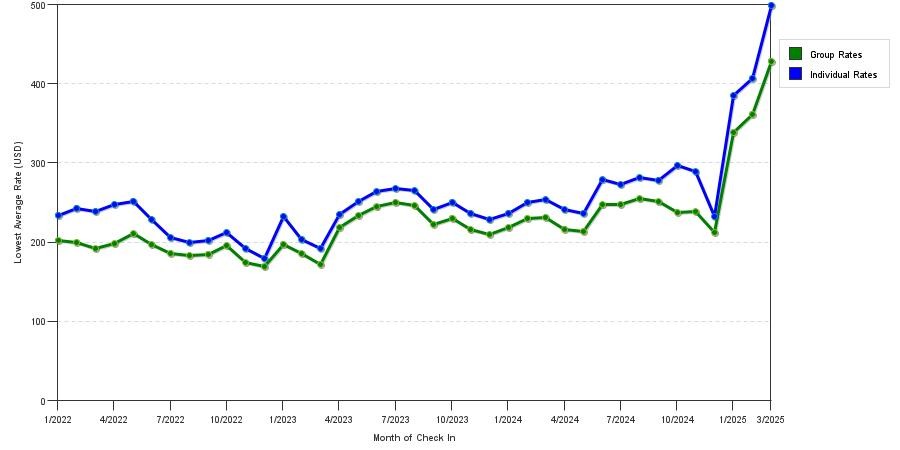
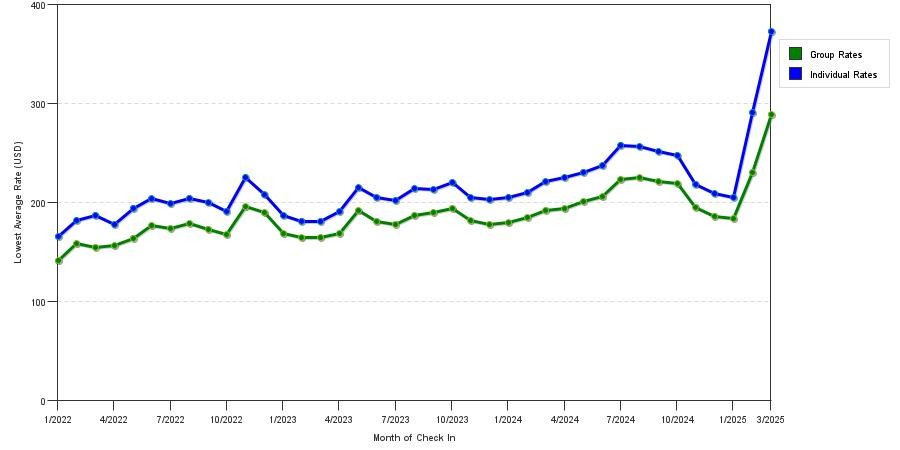
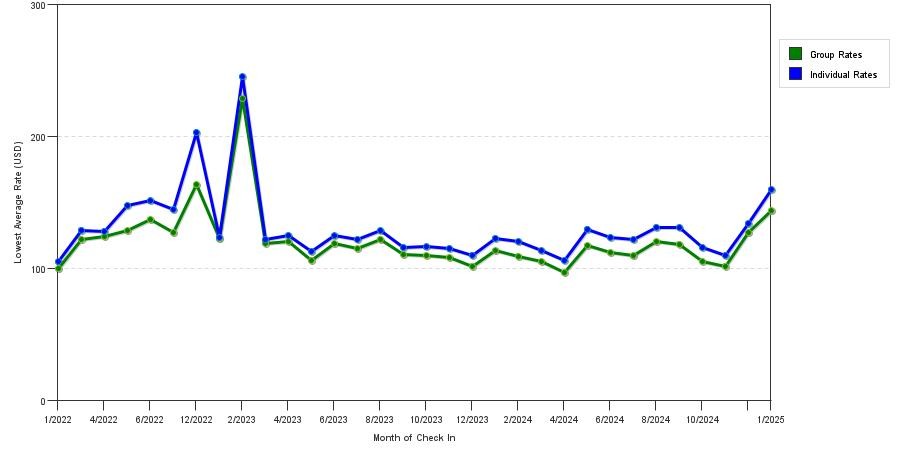
Below are 3 charts demonstrating mean nightly cost trends by star rating class in Los Angeles, CA. You can use these illustrations to calculate the most cost effective seasons to stay in Los Angeles for upcoming travels.
Luxury Hotel Options in Los Angeles, California
4 Star Average Prices: $195.38
The glitz and glam of Los Angeles is yours for the taking when you book a room at one of the city's many luxury hotels. Fit for a celebrity, these accommodations offer all the opulence you crave for your California getaway.
Historic charm and modern conveniences come together at the Hilton Checkers. Originally built in 1927, the building commands an excellent location in the heart of the business and financial districts near the Los Angeles Convention Center. Guest rooms feature marble-floored bathrooms, rain showers, 42-inch televisions, MP3 alarm clocks, and ergonomic work desks. Cotton terry bathrobes beg you to lounge the day away with complimentary HBO or on-demand movies and video games. Evening room service makes sure you have everything you need for a cozy night in.
Another historic pick for luxurious charm is the Beverly Wilshire. This Four Seasons Hotel is housed in the original 1928 building, just a short stroll from Rodeo Drive. The hotel's 395 guest rooms and suites span two buildings, connected by an elegant gate that took its inspiration from Buckingham Palace. The spacious guest rooms feature Italian marble bathrooms and sleek contemporary decor.
One of the most distinctive highlights of this hotel is its carefully curated experiences. Book anything from the Pretty Woman for a Day experience, which allows you to live your own version of the movie, to a carefully customized Girls' Getaway for a truly immersive taste of what the Beverly Wilshire has to offer.
The Peninsula Beverly Hills is the only Southern California hotel with the distinction of earning the Forbes Five Star rating and AAA Five Diamond award every year since 1993. Even the most unassuming rooms at the hotel feature Prette bed linens, surround-sound LCD televisions with DVR, bedside environmental controls, bathrobes and slippers, and stocked minibars. Upgrade to the Beverly Suite and enjoy added perks like complimentary use of a luxury vehicle and complimentary shoe shining service.
Affordable Hotel Options in Los Angeles, California
3 Star Average Prices: $170.96
While you may associate Los Angeles with celebrity-level luxuries, there are actually many affordable options for travelers on a budget. You don't have to put a major dent in your vacation budget to enjoy a comfortable room in the city.
If price is more important than amenities, you can find a room with a minimalist approach to extras that still puts you in a convenient area for your vacation. The Eagle Rock Motel is a popular pick for Rose Bowl visitors. The Central Pod Inn Los Angeles puts you near the Walt Disney Concert Hall and Museum of Contemporary Art. Looking for a hotel downtown? The City Center Hotel is right in the heart of it all. A free continental breakfast at this hotel offers added value, while a refrigerator in each room gives you a convenient place to store your own snacks and beverages.
The Antonio Hotel is near China Town and Dodger Stadium, in a neighborhood where you can easily find affordable shopping and dining options. Designed for travelers on a budget, the rooms offer minimal amenities. However, a public stove and laundry facilities offer added convenience.
Many low-cost hotel chains maintain a presence in Los Angeles as well. The Motel 6 Los Angeles Bell Gardens has complimentary WiFi and a micro-fridge in each room. The Best Western Markland Hotel offers low rates as well as a complimentary breakfast, exercise facility, and hot tub.
2 Star Average Prices: $109.55
Best Discounts in Los Angeles, California
The best hotel discounts in Los Angeles are typically available from well-known chains. If you have a favorite brand, you can earn rewards with regular stays, and cash these in or add to them with your time in Los Angeles. Choose a chain and stick with it no matter what city you're headed to for the best member benefits.
At Sheraton hotels, such as the Sheraton Los Angeles Downtown Hotel, you can earn Starpoints for your stay. This hotel also offers AAA member rates, discounted weekend rates, and free breakfast for Starwood Preferred Guest members on select stays.
The Wyndham Hotel Group offers discounted rates for AAA, CAA, and AARP members, as well as for senior citizens. Wyndham Rewards members can earn and redeem points for added savings. Wyndham hotels have a major presence in the LA area, with options at numerous price points, including the Knights Inn Los Angeles Central, Super 8 Los Angeles Downtown, Ramada Los Angeles/Wilshire Center, and Howard Johnson Los Angeles.
Best Western hotels in Los Angeles offer discounted rates for AAA, CAA, and AARP members, guests over 55, government employees, and military personnel. If you want to stay near downtown, the Best Western Plus Dragon Gate Inn is the best place to take advantage of these discounts. Further out, there's also a Best Western Plus Hollywood Hills Hotel and Best Western Markland Hotel.
Best Value Options in Los Angeles, California
Most travelers feel real hotel value lies at the intersection of affordability and amenities. When you don't want a bare-bones approach to comfort and convenience, but you still want a reasonable nightly rate, aim for a mid-range hotel where your dollar goes as far as possible.
The O Hotel is a prime example of a great value. This boutique Los Angeles hotel was built in 1925 and renovated in 2007. An on-site restaurant serves lunch, happy hour, dinner, and room service. The Frais Spa features massage, facial, waxing, and mani/pedi services. In-room amenities include a mini fridge, iPod docking station, hypoallergenic bedding, and eco-friendly amenities. A Samsung Smart TV gives you HD television channels as well as access to streaming services like Netflix.
The Milner Hotel in the heart of downtown Los Angeles offers added value in the form of its complimentary breakfast and free WiFi. Its prime location near the Staples Center and Microsoft Theatre is nearly impossible to beat at the Milner's affordable price point. Rooms at the Milner Hotel are simple and streamlined, but feature comfortable beds, cable television, and an in-room coffee maker.
If you're looking for something a little more elegant, the Luxe City Center Hotel is a bit pricier, but offers plentiful amenities, so there's no question of what you're paying for. This boutique hotel features both a health and fitness suite and complimentary access to the local Gold's Gym. A spa therapist is on-call, so you can book a little extra pampering any time. Guest rooms feature percale linens, goose down pillows, organic bath products, cotton terry robes and slippers, Keurig coffee makers, and nightly turn-down service.
Getting Around Los Angeles, California
The best way to navigate Los Angeles is by car. LA has an extensive system of freeways that connects the most popular communities here. Most of the day, these offer an efficient way to get from one point to another. However, if you hit the road between 7 and 9 a.m. or 3 and 7 p.m., you'll likely hit bumper-to-bumper traffic, particularly on U.S. 101 and I-405.
If you can't rent a car while you're in LA, the Metro Rail has six lines and 80 stations connecting Pasadena, Hollywood, Westside, Culver City, Long Beach, the Beach Cities, the San Fernando Valley, East LA, and Downtown LA. Take your time mapping out your route and include plenty of extra time for reaching your destination.
From budget bargains to luxe suites, Los Angeles truly has a hotel for every type of traveler. Book the best room for your needs and start planning your California escape.
Los Angeles, CA in a nutshell
Eclectic describes Los Angeles and its bewildering range of recreational pursuits. The notorious traffic, smog and other ill effects of urban sprawl can create choke points all over the city but there's a lot to love about LA. Beyond the haze and craziness, there's a laidback coolness embraced by everyone in the City of Angels. A great part of LA's popularity stems from its 60-mile-long western coastline dotted by a string of beaches. Choose from chic Malibu, shopping-savvy Santa Monica or bohemian Venice Beach as your sandy playground for the day. A visit to Los Angeles won't be complete without dropping by on the well-heeled folks in Beverly Hills and indulge in a little celebrity-spotting for the afternoon. Despite the transfer of major film studios to areas like Studio City, Hollywood remains a popular destination because of its landmarks like the Walk of Fame, Hollywood History Museum and the Kodak Theatre. Escape to more definitive LA jaunts such as Chinatown and Little Tokyo restaurants for a taste of Asian cuisine with a California twist.
'There exists no such place as heaven. The closest any place can come to being called a heaven, at least for us, is Los Angeles, California “ right here and right now. No exaggeration, no subtlety. Just plain, honest truth.
This is how the Beach Boys, one of the greatest rock n' roll bands of all time, summed up their love for Los Angeles, a city that millions of people from America and around the world crave to visit at least once in their lives.
Los Angeles is a city of dreams. It's a city of dreams coming true, and more dreams being dreamt. It's a city that loves to live in its own cosy cocoon, regardless of and indifferent to what happens in the world at large. People here are often loved, adored and also despised by outsiders and still, millions of people flock here every year, to see it all and soak it all.
It's a city of stars. Stars are made here and forged solid their popularity that transcend boundaries of race, religion and nationality. Million dollar movies are made here, only to earn many millions more in the rest of the world. Chart topping albums are produced here, filling playlists of music lovers everywhere. There's no activity unattractive here, and no attractive activity absent from here.
From sprawling malls to impressive operas and from crystal clear beaches to mind-boggling highway networks, Los Angeles is truly a phenomenon that much of the world has always been in an awe of.
If you are planning on visiting Los Angeles, you should be, nay you must be, aware of the fact that it is impossible to cram all the things that Los Angeles has to offer you in one trip. You will keep coming back, to see everything “ not to miss out on anything.
This post should be a good enough start for those who are wondering what sort of lodging options Los Angeles has in store for visitors.
Cheap Lodging in Los Angeles
It's a difficult prospect, simply due to the fact that Los Angeles is one of the best places to live life in, and one of the most expensive cities in terms of real estate, eating out and in general, the cost of living.
Finding cheap hotels would have been a tad easier for tourists had the city not spiralled into a behemoth of light, glitter and fame “ every other building in the city seems to have a blue plaque decorating itself for the stay of some famous person in its premises.
Despite that, if you are really determined to find cheap hotels for your upcoming stay in Los Angeles, you should know what to expect. What is termed to be cheap here may not well conform to the idea of cheapness in other parts of the country.
Among all these hotels in Los Angeles, a few, however manage to stand out from the clutter. Venice Breeze Suites is definitely among them. Located in the middle of all the sights that tourists usually love to see, it also provides a quiet sanctuary in this city of noise and mania.
Holiday Inn (in spite of its generic name) and Elan Hotel also provide a good accommodation to tourists, at reasonably low prices.
Lavish LA Retreats
People usually decide to go to Los Angeles to take a break from their dull and boring mundane routine life. In that sense, it wouldn't be a bad idea to try out some of the luxuries that posh Los Angeles hotels of the best kind can offer.
Omni Los Angeles at California Plaza is among the best in the world when it comes to location, services and level of comfort provided to guests. Similarly, Four Seasons at Los Angeles isn't too far behind in this manic competition of extravagance.
But be sure to reap all the rewards you deserve “ because these lavish luxury hotels in Los Angeles are known to average at $399 or more per night!
Alternative Accommodation in Los Angeles
Not everyone can afford to live in a $399 per night suite. Not everyone, on the other hand, likes to spend their trip time in a dilapidated old motel, either. That's why, in a way to the much needed balance that the chaos of Los Angeles demands, there are quite a few independent staying options for tourists.
The best known among them would be renting out a studio apartment or a decent enough holiday home. These usually cost much lesser than other luxury options, and are more flexible when it comes to your convenience!
Do's & Dont's of Los Angeles Sightseeing
Sightseeing in a mega-city like Los Angeles can be an overwhelming experience, especially if you are much acquainted with the local culture.
Los Angeles is perhaps the most liberal city in the world, and hence, there's no particular thing you should be concerned about while sightseeing here (apart from obviously illegal activities!).
Keeping some change handy will also be of advantage to you as many places in Los Angeles do not use hard cash for transactions and it can difficult to get your money changed.
For foreign tourists, Los Angeles hotels usually plan out sightseeing itineraries at some extra charge. These include fare for planning, personnel and transportation. If not, you always have the option of using a sightseeing tour (countless many exist here).
Getting Around in LA
Getting around in Los Angeles is a very manageable task once you are well-acquainted with the basic anatomy of the city. Being among the best cities in the world, Los Angeles boasts of an efficient public transport network that can rival any other counterpart in the world on quality and frequency bases.
If that's not your cup of tea, you will have the more expensive option of renting a car, or even better, just hiring a cab driver for a day's job.
It should be remembered that private taxi aggregation apps work great here in Los Angeles, but their prices per mile are much higher than anywhere else!
FAQs about hotels in Los Angeles
How much does a cheap hotel in Los Angeles cost per night?
In the last year, a 2 star hotel in Los Angeles can be as cheap as $109.55 per night. (based on HotelPlanner prices)
How much does a 3 star hotel in Los Angeles cost per night?
In the last year, the average 3 star hotel in Los Angeles has been $170.96 per night. (based on HotelPlanner prices)
How much does a higher-end hotel in Los Angeles cost?
In the last year, the average 4 star hotel in Los Angeles has been $195.38 per night. (based on HotelPlanner prices)